
Most people know their credit score the way they know their blood pressure reading: a number they glance at occasionally, feel vaguely good or bad about, and then promptly forget the meaning behind. You might know your score is “good” or “needs work,” but do you actually know what it’s measuring, or what it says about your broader financial life?
Here’s the truth that doesn’t get said enough: your credit score isn’t really about whether you’re a responsible person. It’s a narrow, mathematical snapshot of how you’ve handled borrowed money, nothing more and nothing less. It doesn’t know about your savings account, your income, or the fact that you’ve never missed rent in your life if that rent was never reported to a credit bureau. Understanding what it actually reflects, and what it doesn’t, is the first step toward using it as a genuinely useful financial tool instead of a source of quiet anxiety.
This guide breaks down what your credit score really measures, what it can and can’t tell you about your financial health, and what to actually do about it.
What A Credit Score Actually Is
A credit score is a three-digit number, typically ranging from 300 to 850 depending on the scoring model, designed to predict how likely you are to repay borrowed money based on your past credit behavior. Lenders use it to quickly assess risk when deciding whether to approve you for a loan, credit card, mortgage, or even certain rental agreements and utility accounts.
The two most widely used scoring models are FICO and VantageScore. While they weigh factors slightly differently, both rely on information pulled from your credit reports, which are maintained by the three major credit bureaus. Your score is essentially a mathematical summary of that report, translated into a single number lenders can quickly interpret.
It’s worth remembering that you don’t have just one credit score. Different scoring models, and even different versions of the same model, can produce slightly different numbers. That’s why the score you see on a free banking app might differ somewhat from the one a mortgage lender pulls.
The Five Factors That Actually Shape Your Score
Understanding what goes into your score is far more useful than obsessing over the number itself, since it tells you exactly where to focus your energy.
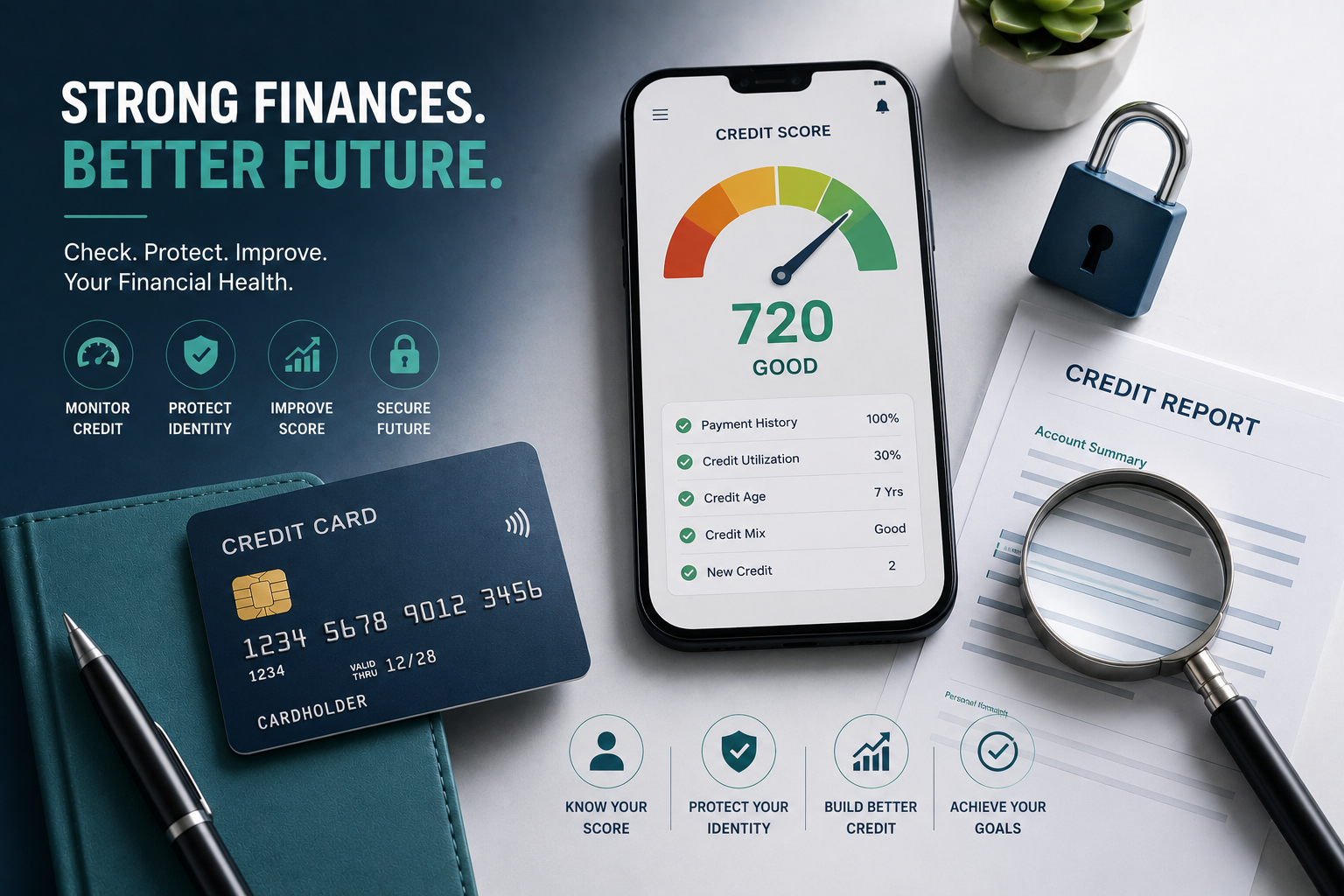
1. Payment History (Roughly 35% Of Your Score)
This is the single biggest factor, and it makes sense: lenders care most about whether you’ve historically paid what you owe, on time. Late payments, collections, bankruptcies, and defaults all weigh heavily here, and their negative impact tends to fade gradually over several years rather than disappearing overnight.
2. Credit Utilization (Roughly 30% Of Your Score)
This measures how much of your available credit you’re currently using, particularly on revolving accounts like credit cards. Someone with a $10,000 credit limit who carries a $9,000 balance looks riskier to lenders than someone using $1,000 of that same limit, even if both are paying on time. Keeping utilization low signals that you’re not overly dependent on borrowed money to get by.
3. Length Of Credit History (Roughly 15% Of Your Score)
This factors in how long you’ve had credit accounts open, including your oldest account, your newest account, and the average age across all your accounts. A longer track record generally suggests more reliable, established behavior, which is part of why closing old credit cards can sometimes hurt your score more than expected.
4. Credit Mix (Roughly 10% Of Your Score)
Lenders like to see that you can responsibly manage different types of credit, such as revolving credit (credit cards) and installment loans (auto loans, mortgages, student loans). A healthy mix suggests broader financial capability, though this factor matters far less than payment history or utilization.
5. New Credit Inquiries (Roughly 10% Of Your Score)
Every time you apply for new credit, it typically generates a hard inquiry, which can cause a small, temporary dip in your score. Opening several new accounts in a short period can suggest financial strain to lenders, even if your actual situation is stable.
What Your Credit Score Actually Tells Lenders
At its core, your credit score answers one narrow question for lenders: how risky is it to lend this person money based on their past borrowing behavior? A higher score generally suggests lower risk, which is why it tends to unlock better loan terms, lower interest rates, and easier approval odds.
This is why your credit score has ripple effects well beyond just credit card approvals. It can influence:
- Mortgage and auto loan interest rates, sometimes to the tune of tens of thousands of dollars in extra interest over the life of a loan for lower scores
- Credit card approval and rewards eligibility, with premium cards typically reserved for higher scores
- Insurance premiums in some states and countries, where insurers use credit-based scores as one factor in pricing
- Rental applications, since many landlords check credit as part of tenant screening
- Certain employment screenings, particularly for roles involving financial responsibility, though this varies by location and industry
What Your Credit Score Does NOT Tell You
This is the part that often gets lost in the conversation, and it matters just as much as understanding what goes into the score.
It doesn’t reflect your income. You can have an excellent credit score while living paycheck to paycheck, or a modest score while earning a high income, since the score only measures borrowing behavior, not earnings.
It doesn’t reflect your savings or net worth. Someone with substantial savings and investments but limited credit history can have a lower score than someone with significant debt who simply pays it on time.
It doesn’t measure your overall financial literacy or decision-making. Plenty of financially savvy people intentionally keep minimal credit activity and end up with average scores as a result, not because they’re financially irresponsible, but because the scoring system rewards active, well-managed credit use.
It doesn’t account for one-time life circumstances. A medical emergency, job loss, or unexpected hardship that led to missed payments doesn’t get context or nuance in your score. The number simply reflects the outcome, not the story behind it.
It doesn’t measure your ability to budget or manage cash flow. You could be an excellent budgeter with rock-solid financial habits and still have a mediocre score simply due to limited credit history or a mix that doesn’t align with what scoring models favor.
This is exactly why financial health and credit health, while related, are not the same thing. A strong credit score is a useful tool, not a complete financial report card.
Understanding Credit Score Ranges
While exact ranges can vary slightly between scoring models, general categories typically look something like this:
- Excellent (roughly 800–850): Access to the best interest rates and terms, minimal barriers to approval
- Very Good (roughly 740–799): Strong approval odds and competitive rates on most credit products
- Good (roughly 670–739): Generally solid approval odds, though not always the most competitive rates
- Fair (roughly 580–669): Approval is possible but often comes with higher interest rates or stricter terms
- Poor (below 580): Approval becomes significantly harder, and when granted, typically comes with high interest rates or required deposits
It’s worth noting that “good enough” depends heavily on what you’re trying to do. A score that easily qualifies you for a standard credit card might not be competitive enough for the best mortgage rates, where lenders often reserve their most favorable terms for borrowers in the very good to excellent range.
How To Actually Improve Your Credit Score
If your score isn’t where you’d like it to be, the good news is that credit scores are genuinely responsive to changed behavior over time, unlike some financial metrics that take years to shift.
Pay On Time, Every Time
Since payment history carries the most weight, this is the single highest-impact habit you can build. Setting up automatic payments, even just for the minimum due, helps protect against accidental late payments that can otherwise linger on your report for years.
Lower Your Credit Utilization
Paying down credit card balances, or requesting a credit limit increase without increasing your spending, both lower your utilization ratio and can meaningfully boost your score, sometimes within a single billing cycle.
Avoid Closing Old Credit Accounts Unnecessarily
Even if you rarely use an old credit card, keeping it open can help preserve your average account age and overall available credit, both of which support a healthier score.
Be Strategic About New Credit Applications
Space out applications for new credit rather than applying for several accounts in a short window, particularly before a major loan application like a mortgage, where you want your score as stable and strong as possible.
Check Your Credit Reports Regularly
Errors on credit reports are more common than most people realize, and they can drag your score down without your knowledge. Reviewing your reports periodically and disputing inaccuracies can lead to a meaningful score improvement.
Consider A Secured Card Or Credit-Builder Loan If You’re Starting From Scratch
For those with limited or no credit history, these tools are specifically designed to help build a track record of on-time payments in a lower-risk way for both you and the lender.
Be Patient With Negative Marks
Most negative items, aside from certain bankruptcies, gradually lose their impact on your score over time and eventually fall off your report entirely, typically after seven years. Consistent positive behavior in the meantime steadily rebuilds your score even while older negative marks are still present.
Why Credit Health Should Be Part Of A Bigger Financial Picture
Because your credit score only tells part of the story, it shouldn’t be the sole measure you use to judge your financial progress. A genuinely healthy financial life typically includes several other elements working together:
An emergency fund that can cover unexpected expenses without relying on high-interest debt.
A reasonable debt-to-income ratio, reflecting how much of your income goes toward debt payments relative to what you earn.
Consistent saving and investing habits that build long-term wealth beyond just managing borrowed money responsibly.
A realistic budget that aligns your spending with your actual income and priorities.
Appropriate insurance coverage that protects you from financial setbacks that credit alone can’t solve.
Someone can have an excellent credit score while lacking any of these other pieces, just as someone can have strong overall financial health while carrying an average credit score simply due to limited credit activity. Treating your credit score as one useful data point, rather than the entire verdict on your financial life, leads to a much healthier relationship with your finances overall.
Common Misconceptions About Credit Scores
“Checking my own credit score hurts it.” Checking your own score or report is considered a soft inquiry and does not affect your score at all, regardless of how often you check.
“I need to carry a balance to build credit.” This is a persistent myth. Paying your balance in full each month still builds positive payment history and avoids unnecessary interest charges.
“Closing unused cards always helps my score.” In most cases, closing a card actually reduces your available credit and can shorten your average account age, both of which can hurt rather than help your score.
“A single missed payment will destroy my score permanently.” While a missed payment does cause a noticeable dip, especially for those with otherwise strong credit, its impact lessens over time, particularly if it remains an isolated incident rather than a pattern.
“My income affects my credit score.” Income isn’t a factor in credit scoring models at all, though lenders may still consider it separately during the approval process for larger loans.
Final Thoughts
Your credit score is a useful, narrow tool, not a complete verdict on your financial character or overall wellbeing. It reflects a specific slice of your financial life: how reliably you’ve managed borrowed money over time. Understanding exactly what factors shape it puts you in a much stronger position to improve it intentionally, rather than feeling like it’s a mysterious number completely outside your control.
At the same time, don’t let your credit score become the sole measure of your financial health. Real financial wellbeing includes savings, sensible spending habits, thoughtful debt management, and consistent long-term planning, most of which your credit score simply doesn’t capture. Use it as one important piece of a much bigger picture, and focus your energy on building genuinely healthy financial habits that serve you well beyond just what shows up on a lender’s screen.
Frequently Asked Questions
What is considered a good credit score? Generally, a score in the high 600s to low 700s is considered good, while scores above 740 are typically viewed as very good to excellent, unlocking the most competitive interest rates and terms.
How often does my credit score update? Your score typically updates whenever new information is reported to the credit bureaus, which often happens monthly as lenders report account activity, though timing can vary by creditor.
Can I have a good credit score with a lot of debt? Yes, as long as payments are made on time and credit utilization remains reasonably low relative to your available credit limits, since the score measures repayment behavior more than the raw amount of debt itself.
Does checking my credit score lower it? No. Checking your own score or report is a soft inquiry and has no impact on your credit score, regardless of frequency.
How long does it take to improve a credit score? It varies depending on your starting point and what’s affecting your score, but many people see noticeable improvement within a few months of consistent positive changes, such as timely payments and reduced credit utilization, while more significant repairs from major negative marks can take longer.