
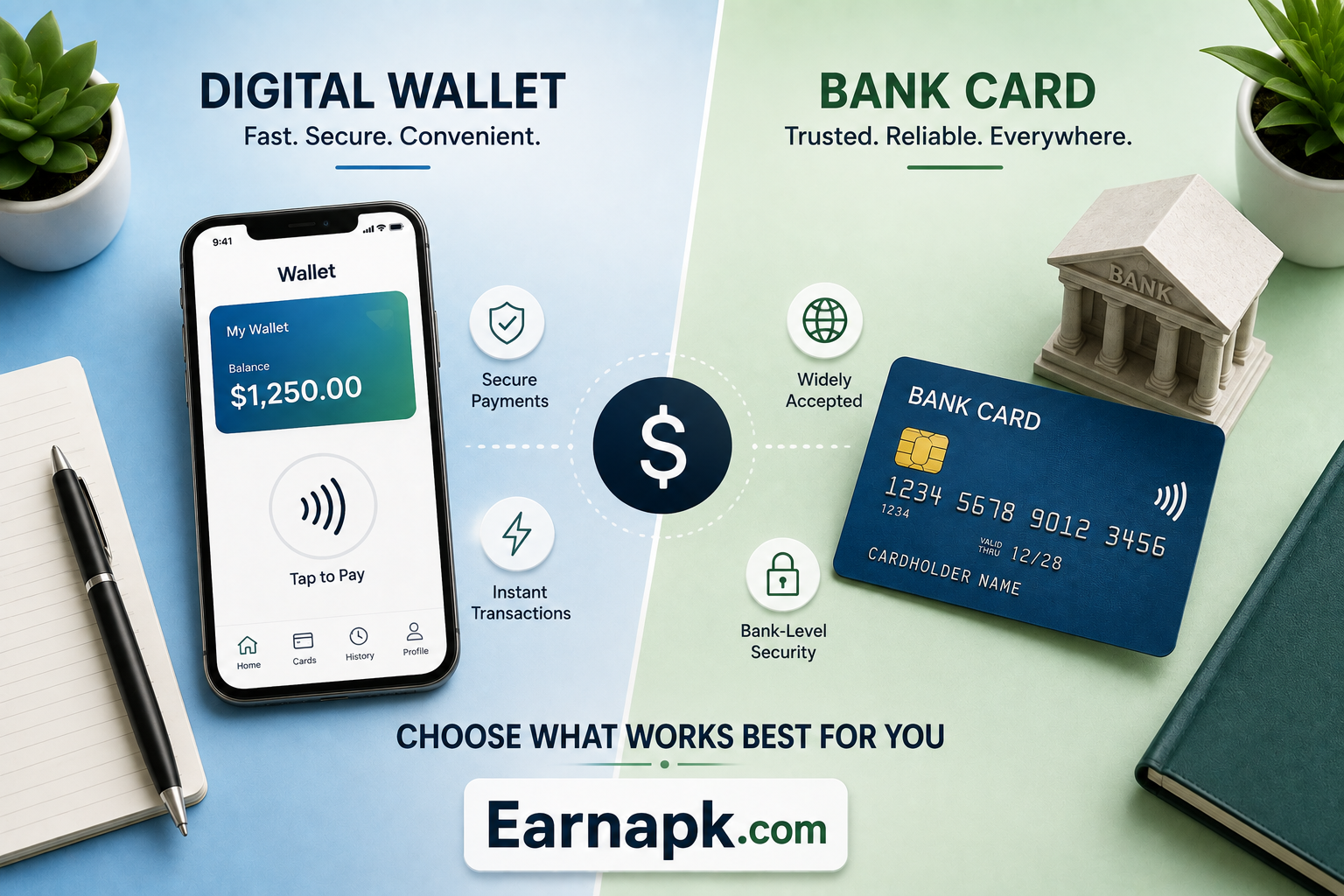
A few years ago, this wasn’t really a question. You had a bank account, maybe a debit card, and that was that. But somewhere between the rise of PayPal, Venmo, Cash App, Apple Pay, and a growing wave of neobanks and fintech apps, “where should my money actually live” became a genuinely confusing decision.
In 2026, digital wallets have evolved well past their original role as a simple way to send a friend money for pizza. Many now function almost like full bank accounts, complete with direct deposit, savings features, and even debit cards of their own. Meanwhile, traditional banks have leaned harder into their own apps, trying to feel just as fast and frictionless as the fintech competitors chipping away at their customer base.
So which one should actually hold your everyday money? The honest answer is that for most people, it’s not really an either-or decision anymore. It’s about understanding what each one does well, where each one falls short, and how to combine them intelligently rather than picking a single winner. Let’s break it all down.
What Counts As A Digital Wallet In 2026?
The term “digital wallet” covers a broader range of tools than it used to. Generally, it includes:
- Peer-to-peer payment apps like Venmo, Cash App, and PayPal, originally built for sending money between friends and family
- Mobile payment systems like Apple Pay, Google Pay, and Samsung Pay, which store your card information for tap-to-pay purchases
- Neobanks and fintech accounts like Chime, Cash App’s banking features, or similar app-based financial services that offer spending accounts, savings features, and debit cards without a traditional physical bank branch
- Buy-now-pay-later and hybrid finance apps that combine payment, budgeting, and sometimes limited banking features into one app
Some of these are purely for moving money around, while others have essentially become full replacements for a traditional checking account. This distinction matters a lot when deciding what role each should play in your financial life.
What Counts As A Traditional Bank Account?
A traditional bank account, whether from a large national bank, a regional bank, or a credit union, typically includes:
- Checking accounts for everyday spending, bill payments, and debit card use
- Savings accounts for setting money aside, often earning modest interest
- Access to physical branches and ATMs, though this varies significantly depending on the bank
- FDIC or NCUA insurance, protecting your deposits up to certain legal limits in the event the bank fails
- A broader range of financial products, including loans, mortgages, credit cards, and in-person financial advising
Even digitally-focused banks fall into this category as long as they operate under a proper banking charter and carry deposit insurance, which distinguishes them from many purely app-based fintech wallets.
Digital Wallets: The Real Advantages
Speed And Convenience
Digital wallets are typically built for one thing above all else: frictionless, fast transactions. Sending money to a friend, paying at checkout with a tap of your phone, or splitting a bill after dinner all happen in seconds, often without even opening a separate app in some cases thanks to integrated mobile payment systems.
Easier Account Setup
Opening a digital wallet or neobank account is often faster and less bureaucratic than opening a traditional bank account. Many can be set up entirely on your phone within minutes, without needing to visit a branch or provide extensive documentation upfront.
Useful Budgeting And Spending Features
Many digital wallets and fintech apps include built-in spending trackers, automatic savings tools, and instant notifications for every transaction, giving users real-time visibility into their spending habits that traditional banks have historically been slower to offer.
Fewer Or No Traditional Fees
Many digital wallets and neobanks avoid the monthly maintenance fees, minimum balance requirements, and overdraft charges commonly associated with traditional bank accounts, which can make them appealing for people trying to avoid unnecessary costs.
Early Access To Direct Deposits
A number of neobank-style digital wallets now offer early access to paychecks through direct deposit, sometimes releasing funds up to a day or two before the official payday, which some users find genuinely useful for cash flow timing.
Digital Wallets: The Real Drawbacks
Inconsistent Deposit Insurance
Not all digital wallets offer the same protection as a traditional bank account. Some route funds through partner banks and do carry deposit insurance, but others, particularly pure peer-to-peer apps, may not offer the same level of protection for balances left sitting in the app. This is one of the most important things to verify before treating a digital wallet like a primary bank account.
Limited Full-Service Banking Features
Most digital wallets don’t offer mortgages, auto loans, or the kind of in-person financial advising that traditional banks provide, which can become a real limitation as your financial needs grow more complex.
Customer Support Can Be Harder To Reach
Many digital wallets rely heavily on in-app support, chatbots, or email, without the option of walking into a branch or speaking with a banker directly when something goes wrong, such as a fraud issue or a frozen account.
Account Freezes And Fraud Disputes Can Be Frustrating
Fintech apps have occasionally faced criticism for freezing accounts during suspicious activity reviews, sometimes leaving users without access to their funds for an uncomfortable stretch of time while the issue gets resolved.
Not Ideal As Your Only Financial Relationship
Since digital wallets typically don’t offer the full range of financial products, relying on one exclusively can make it harder to build a broader financial history, such as a track record useful for larger loans or mortgages down the road.
Traditional Bank Accounts: The Real Advantages
Strong, Reliable Deposit Insurance
Funds held in properly insured traditional bank accounts are protected up to legal limits if the bank fails, offering a level of security and predictability that not all digital wallets can guarantee.
Full Range Of Financial Services
Banks typically offer checking accounts, savings accounts, credit cards, personal loans, auto loans, and mortgages all under one roof, which can simplify your financial life as your needs grow more complex.
In-Person Support When You Need It
While not everyone values this, having the option to visit a branch and speak directly with someone can matter significantly during more complicated situations, such as disputing a fraudulent charge or navigating a loan application.
Established Trust And Track Record
Traditional banks, especially long-established ones, often carry a level of institutional trust and regulatory oversight that newer fintech companies are still working to build.
Better Integration With Larger Financial Goals
Building a relationship with a traditional bank can make it easier to eventually qualify for larger financial products, since banks often consider your existing account history and relationship when evaluating loan or credit applications.
Traditional Bank Accounts: The Real Drawbacks
Slower, More Bureaucratic Processes
Traditional banks can be slower to open accounts, process certain transactions, or roll out modern app features compared to digital-first competitors built specifically for speed and simplicity.
More Fees, In Many Cases
Monthly maintenance fees, minimum balance requirements, and overdraft charges remain common at many traditional banks, particularly at larger institutions, though this varies significantly by bank and account type.
Less Cutting-Edge App Experience
While many banks have significantly improved their apps in recent years, some still lag behind fintech competitors in terms of interface design, real-time notifications, and built-in budgeting tools.
Physical Branch Access Isn’t Always Convenient
Depending on where you live, branch access may be limited, reducing one of the traditional advantages of banking with a brick-and-mortar institution in the first place.
So Which One Should You Actually Use?
Here’s the honest, practical answer: most people benefit from using both, each for what it does best, rather than trying to force one option to handle everything.
Use A Traditional Bank Account For:
- Your primary savings, especially larger amounts you want fully insured and protected
- Long-term financial planning, including retirement accounts, mortgages, and major loans
- Situations where you might need in-person support or a broader banking relationship
- Building a financial history useful for future credit or loan applications
Use A Digital Wallet For:
- Everyday spending, quick purchases, and tap-to-pay convenience
- Splitting bills or sending money to friends and family instantly
- Budgeting features and real-time spending visibility
- Smaller, more liquid funds you want quick, flexible access to
A Simple Hybrid Approach That Works Well For Many People
Keep your primary paycheck deposit and larger savings in a traditional, insured bank account. Transfer a set amount each month into a digital wallet or neobank account specifically for everyday spending and discretionary purchases. This approach gives you the security and full-service benefits of traditional banking, combined with the speed, convenience, and budgeting visibility that digital wallets do particularly well.
Key Questions To Ask Before Choosing
Is my money actually insured? Always verify whether a digital wallet’s balances are covered by deposit insurance through a partner bank, and understand the specific conditions required for that protection to apply.
What are the actual fees involved? Compare monthly fees, transfer fees, ATM fees, and any hidden charges across both traditional and digital options before deciding where to keep significant amounts of money.
How will I access support if something goes wrong? Consider how comfortable you are relying primarily on app-based or chat support versus having the option of in-person assistance.
What financial products might I need in the near future? If you’re planning to apply for a mortgage, auto loan, or other significant financial product soon, maintaining an established relationship with a traditional bank can be genuinely useful.
How do I actually spend and manage money day to day? If you value real-time spending visibility, quick peer-to-peer transfers, and tap-to-pay convenience, digital wallets likely deserve a meaningful role in your everyday routine, even if they’re not your only financial account.
Common Mistakes People Make With Digital Wallets And Bank Accounts
Keeping large savings entirely in an uninsured or partially insured digital wallet. This unnecessarily exposes significant funds to risk that a properly insured traditional account would protect.
Relying entirely on a digital wallet with no traditional banking relationship. This can make it harder to qualify for loans, mortgages, or other financial products down the road that often consider your banking history.
Ignoring the fine print on fees and insurance coverage. Many people assume all digital wallets work identically, when coverage and fee structures can vary significantly between providers.
Never comparing costs across both banking and digital wallet fees. Small monthly fees or transfer charges can add up meaningfully over a year without regular review.
Failing to separate spending money from savings. Mixing everyday spending funds with long-term savings in a single account, digital or traditional, makes budgeting and financial planning significantly harder.
Final Thoughts
Digital wallets and traditional bank accounts aren’t really competitors anymore so much as complementary tools serving different purposes. Digital wallets excel at speed, convenience, and everyday spending visibility, while traditional bank accounts offer stronger insurance protections, broader financial services, and a foundation for larger financial goals down the road.
Rather than asking which one is objectively better, the more useful question is how to combine them intelligently based on your own financial habits and goals. For most people in 2026, that means a traditional, insured account anchoring your savings and larger financial life, paired with a digital wallet handling the fast-moving, everyday transactions that fintech apps have genuinely gotten very good at.
Frequently Asked Questions
Is it safe to keep money in a digital wallet? It depends on the specific provider. Many digital wallets partner with insured banks to protect user funds, but coverage and conditions vary, so it’s worth verifying directly with your provider rather than assuming full protection.
Can I use a digital wallet as my only bank account? Technically yes, and many people do, but it may limit access to certain financial products like mortgages or larger loans, and you should carefully verify deposit insurance coverage before relying on it exclusively.
Do digital wallets charge fees like traditional banks? Many avoid common traditional banking fees like monthly maintenance charges, but some charge fees for instant transfers, certain card transactions, or specific premium features, so it’s worth reviewing the fee structure carefully.
Which option is better for building credit or applying for loans? Traditional bank accounts and an established banking relationship generally offer more advantages here, since banks often consider your account history when evaluating loan or credit applications.
What’s the safest approach for managing everyday money? For most people, combining a traditional, insured bank account for savings and larger financial needs with a digital wallet for everyday spending and quick transfers offers the best balance of security and convenience.
Откройте для себя доступные развлечения pin up казино официальный сайт и выбирайте подходящие игры. Запустите понравившийся слот и начните игровой сеанс. На платформе представлены слоты и другие форматы. Ищете подходящий формат? Выбирайте игру и начинайте. Перед игрой ознакомьтесь с правилами и условиями сервиса.
Кулинарный корпоратив https://kulinarnyjkorporativ.ru в Санкт-Петербурге: готовите с шеф-поваром, дегустируете и празднуете!
Собираетесь уже сегодня r7 казино и перейти к игровому процессу. Откройте нужному режиму и попробуйте выбранный формат. До начала игры ознакомьтесь с правилами. Запустите интересующий режим и продолжайте играть. Выбрали режим? Запускайте выбранную версию и начинайте после ознакомления с условиями.
Решили игровую платформу gama сайт в удобном формате. Запустите подходящий слот и изучайте игровой процесс. В каталоге доступны разнообразные игровые форматы. Выбирайте понравившиеся слоты и переходите к игровому процессу. Перед использованием сервиса ознакомьтесь с правилами и ограничениями.