
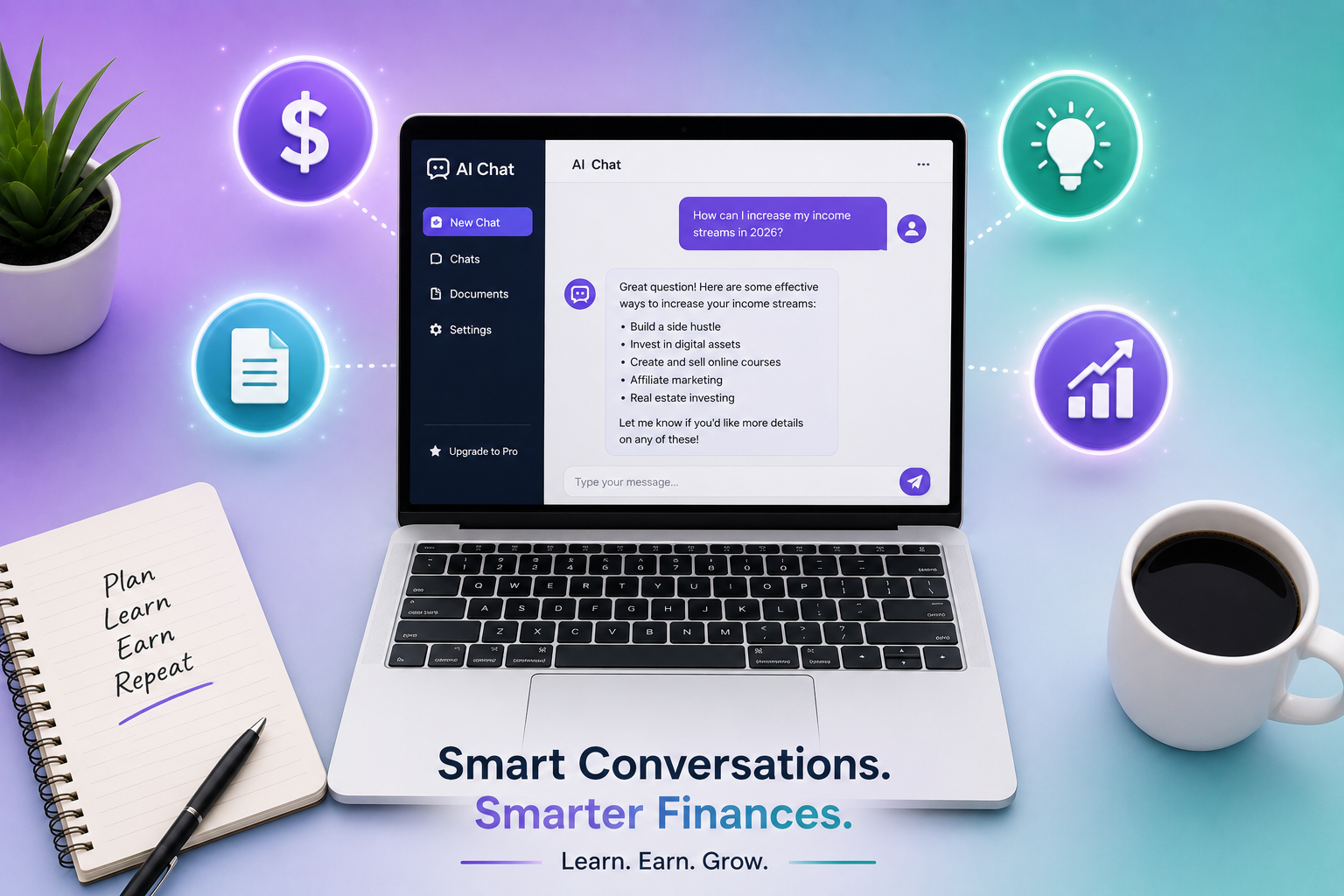
A few years ago, ChatGPT was a novelty people used to write funny poems or settle arguments about grammar. Now it’s quietly become a real income tool for freelancers, side hustlers, and small business owners around the world. Not in some mysterious “AI will make you rich overnight” way, but in a practical, “this saves me hours and helps me deliver better work” kind of way.
If you’ve been wondering whether the whole “make money with ChatGPT” trend is legitimate or just another internet gimmick, the honest answer is: it depends entirely on how you use it. ChatGPT isn’t a magic income machine. It’s a tool, and like any tool, its value depends on the skill and strategy of the person using it. Someone who understands how to combine ChatGPT with a real service, product, or skill can genuinely build meaningful income. Someone expecting it to generate money with zero effort will be disappointed.
This guide walks through 15 legitimate, realistic ways people are actually earning money with ChatGPT in 2026, along with honest notes on what each one actually requires.
Before We Start: What ChatGPT Can And Can’t Do For Your Income
It’s worth setting expectations clearly. ChatGPT is excellent at:
- Speeding up writing, editing, and brainstorming
- Summarizing and organizing information
- Generating first drafts you can refine
- Helping with research, outlines, and structure
- Assisting with code, spreadsheets, and repetitive tasks
- Acting as a thinking partner for planning and problem-solving
It’s not great at replacing genuine expertise, building real client relationships, or guaranteeing quality without human review. The people making real money with ChatGPT treat it as a productivity multiplier layered on top of an actual skill or business, not a replacement for one.
With that in mind, here are 15 legitimate ways to turn that productivity boost into real income.
1. Freelance Writing And Content Creation
Freelance writers have long used ChatGPT to speed up research, generate outlines, and get past the blank page. Clients still expect polished, fact-checked, human-edited work, but ChatGPT can meaningfully cut the time it takes to produce a first draft, letting you take on more clients or deliver work faster without sacrificing quality.
What it takes: Genuine writing skill, editing ability, and a portfolio to attract clients on platforms like Upwork, Fiverr, or through direct outreach.
2. Copywriting For Businesses
Sales pages, email campaigns, ad copy, and product descriptions are all areas where ChatGPT can generate strong first drafts based on a clear brief. Skilled copywriters use it to explore multiple angles quickly, then apply their own persuasion expertise to refine the final version.
What it takes: An understanding of marketing psychology and persuasive writing, since raw AI output rarely converts well without human refinement.
3. Blogging And Niche Websites
As covered in our blogging guide, running a successful blog in 2026 rewards depth and originality, and ChatGPT can help speed up research, outlining, and first drafts, freeing up more time for the personal insight and original angles that actually drive traffic and rankings.
What it takes: A clear niche, genuine subject knowledge, and a willingness to heavily edit AI-assisted drafts rather than publishing them as-is.
4. Creating And Selling Digital Products
Ebooks, templates, worksheets, and planners can all be developed faster with ChatGPT’s help, from outlining chapters to drafting content or generating supporting text. Once created, these products can be sold repeatedly on platforms like Etsy, Gumroad, or your own website.
What it takes: A specific audience with a real problem to solve, plus design and formatting skills or a willingness to learn basic tools.
5. Building And Selling AI-Powered Prompt Guides
Some entrepreneurs create and sell curated prompt collections or guides tailored to specific professions, such as prompts for real estate agents, teachers, or small business marketing. Buyers pay for the time saved rather than figuring out effective prompts themselves.
What it takes: Deep familiarity with a specific industry’s pain points and genuinely tested, effective prompts, not just generic lists.
6. Social Media Content Creation And Management
Social media managers increasingly use ChatGPT to draft captions, generate content calendars, brainstorm post ideas, and repurpose long-form content into shorter social posts. This can significantly speed up managing multiple client accounts.
What it takes: An understanding of each platform’s tone and best practices, plus the ability to adapt AI drafts into content that fits a brand’s authentic voice.
7. Resume And Cover Letter Writing Services
Job seekers regularly pay for professionally written resumes and cover letters. ChatGPT can help draft strong, tailored language quickly based on a client’s experience and target role, which a skilled writer then refines and formats professionally.
What it takes: Knowledge of what hiring managers and applicant tracking systems look for, plus strong formatting and editing skills.
8. Virtual Assistant Services
Virtual assistants use ChatGPT to draft emails, organize schedules, summarize meeting notes, create standard operating procedures, and handle various administrative tasks more efficiently, allowing them to serve more clients or take on higher-value tasks.
What it takes: Strong organizational skills and reliability, since clients are ultimately paying for trustworthy support, not just AI output.
9. Chatbot Development For Small Businesses
Small businesses increasingly want simple AI chatbots for customer service, appointment booking, or lead qualification on their websites. Freelancers with some technical comfort can build these using ChatGPT’s API combined with no-code or low-code tools, then charge businesses for setup and ongoing support.
What it takes: Basic technical skills or willingness to learn no-code AI tools, plus the ability to understand a business’s specific customer service needs.
10. Online Course Creation
Subject matter experts use ChatGPT to help outline course modules, draft supporting materials, generate quiz questions, and organize complex information into a clear curriculum, significantly speeding up the course creation process.
What it takes: Genuine expertise in your chosen subject and either a personal audience or a platform-based marketing strategy to reach students.
11. Language Translation And Localization Support
While not a replacement for professional human translators, ChatGPT can assist bilingual freelancers by handling first-pass translations or explaining nuanced phrasing, which the freelancer then refines for accuracy and cultural context, speeding up delivery for clients.
What it takes: Genuine fluency in both languages and cultural familiarity, since accuracy and nuance matter significantly in professional translation work.
12. Email Marketing And Newsletter Writing
Businesses and creators need consistent, engaging email content, and ChatGPT can help draft newsletters, welcome sequences, and promotional emails quickly based on a clear brief and brand voice guidelines.
What it takes: An understanding of email marketing strategy and copywriting fundamentals, plus the ability to maintain a consistent, authentic brand voice.
13. Consulting On AI Adoption For Small Businesses
As more small business owners want to use AI tools like ChatGPT but don’t know where to start, consultants who understand practical AI applications can offer training, workflow audits, and implementation support for a fee.
What it takes: Genuine hands-on experience using AI tools effectively across different business functions, plus the ability to explain concepts clearly to non-technical clients.
14. Data Analysis And Reporting Support
ChatGPT can help interpret data patterns, draft summary reports, and translate complex spreadsheets into plain-language insights for clients or employers, making it a useful tool for freelance analysts and consultants.
What it takes: Genuine analytical skills and familiarity with the tools and data you’re working with, since AI-generated interpretations still need expert verification.
15. Selling ChatGPT-Assisted Design And Branding Concepts
While ChatGPT doesn’t generate visual designs itself, it can help brainstorm brand names, taglines, brand voice guidelines, and content strategy that pairs with visual branding services, allowing designers to offer more comprehensive branding packages.
What it takes: Design skills or a partnership with a designer, plus strong brand strategy thinking to guide the overall direction.
How To Actually Get Started
Reading a list of ideas is one thing. Turning one into real income requires a bit of a system. Here’s a simple path to follow.
Step 1: Pick One Idea That Matches A Skill You Already Have
Don’t try to do all 15 at once. Choose the option that most closely aligns with a skill, interest, or experience you already possess, since ChatGPT amplifies existing expertise rather than replacing the need for it entirely.
Step 2: Learn To Prompt Effectively
The quality of what you get from ChatGPT depends heavily on how clearly you communicate what you need. Learning to write detailed, specific prompts, including context, tone, format, and examples, dramatically improves your results and saves you editing time later.
Step 3: Always Add Human Value
Whatever you create or offer, make sure a real, valuable layer of human expertise, editing, or judgment sits on top of the AI-generated foundation. This is what separates work people are willing to pay for from generic content nobody wants.
Step 4: Build A Portfolio Or Proof Of Work
Whether you’re freelancing, launching a digital product, or offering a service, potential clients and customers want to see evidence of quality before they pay. Create a few strong examples of your work to showcase, even if you have to start with sample projects.
Step 5: Find Your First Clients Or Customers
Depending on your chosen path, this might mean freelance platforms, direct outreach, social media content showcasing your skills, or launching a simple product page. Start small, gather feedback and testimonials, then expand from there.
Step 6: Systematize And Scale
Once you find an approach that works, document your process so you can repeat it efficiently. Many successful ChatGPT-assisted businesses run on well-refined workflows and prompt templates that consistently produce strong results.
What To Realistically Expect
It’s important to set honest expectations. ChatGPT can meaningfully speed up your work and open doors to new income opportunities, but it doesn’t eliminate the need for real skill, effort, and client relationships. Most people building genuine income this way are combining ChatGPT with an existing skill set, whether that’s writing, marketing, design, virtual assistance, or consulting, rather than starting from zero expertise.
Income potential varies enormously based on your chosen path, your existing skills, and how much effort you put into finding clients or customers. Freelancing and service-based options tend to generate income faster, since you’re solving an immediate problem for a paying client. Digital products and content-based options like blogging often take longer to build momentum but can eventually generate more passive, scalable income.
Common Mistakes To Avoid
Selling raw, unedited AI output. Clients and customers can often tell when something hasn’t been reviewed or refined by a real person, and it damages trust quickly.
Ignoring your niche or existing skills. Trying to use ChatGPT to break into an area you know nothing about, without building any real underlying knowledge, tends to produce mediocre results that are hard to sell.
Underpricing your services. Some freelancers assume that using AI tools means they should charge less, but clients are paying for the final quality and results, not for whether AI was involved in the process.
Neglecting to verify accuracy. ChatGPT can occasionally generate incorrect or outdated information, so fact-checking remains essential, especially for anything involving data, statistics, or specialized knowledge.
Expecting passive income with no effort. Most of these opportunities still require genuine work, whether that’s finding clients, creating quality products, or building an audience. ChatGPT speeds up the process; it doesn’t eliminate the work entirely.
Is Making Money With ChatGPT Right For You?
If you already have a skill, whether that’s writing, marketing, design, virtual assistance, teaching, or consulting, and you’re looking for a way to work faster and take on more opportunities, ChatGPT can be a genuinely valuable addition to your toolkit. It rewards people who combine it thoughtfully with real expertise and effort.
It’s probably not the right fit if you’re hoping to generate income with zero underlying skill or effort involved. Like most legitimate income opportunities, success here comes from pairing a useful tool with genuine value you bring to clients or customers.
Final Thoughts
ChatGPT has genuinely changed how many freelancers, entrepreneurs, and small business owners work, not by replacing human skill, but by removing a lot of the friction and time that used to slow down the process. The 15 ideas above are all realistic paths people are actively using in 2026, but none of them work as a shortcut around building real skill, delivering genuine quality, and putting in consistent effort to find clients or customers.
If you approach ChatGPT as a productivity multiplier for something you’re already good at, rather than a replacement for skill and effort entirely, it can meaningfully accelerate your path toward real, sustainable income.
Frequently Asked Questions
Can you really make money using ChatGPT? Yes, but it works best as a tool that enhances an existing skill or service rather than as a standalone income source with no underlying expertise involved.
Do I need to pay for ChatGPT to make money with it? Not necessarily. Free versions can support many of these ideas, though paid plans often offer faster response times, more advanced capabilities, and higher usage limits that can be worthwhile as your work scales up.
Is it ethical to use ChatGPT for freelance work? Yes, as long as you’re transparent when required by your client or platform, and as long as you’re adding genuine value, editing, and quality control rather than simply reselling raw, unedited AI output.
Which idea on this list is easiest to start with? Freelance writing, virtual assistant services, and resume writing tend to have the lowest barriers to entry, since they primarily require existing skills you can start applying quickly with ChatGPT as a support tool.
How much money can you realistically make? It varies enormously based on your chosen path, existing skills, and effort invested in finding clients or customers. Some people earn modest side income, while others build these ideas into full-time businesses over time.
Когда необходимо подобрать нанять личную охрану на время поездок и мероприятий. Охранные специалисты могут обеспечить сопровождение группы. Для организации сопровождения стоит уточнить условия предоставления услуг. Требуется сопровождение? Уточните условия и обсудите подходящий формат охраны.