
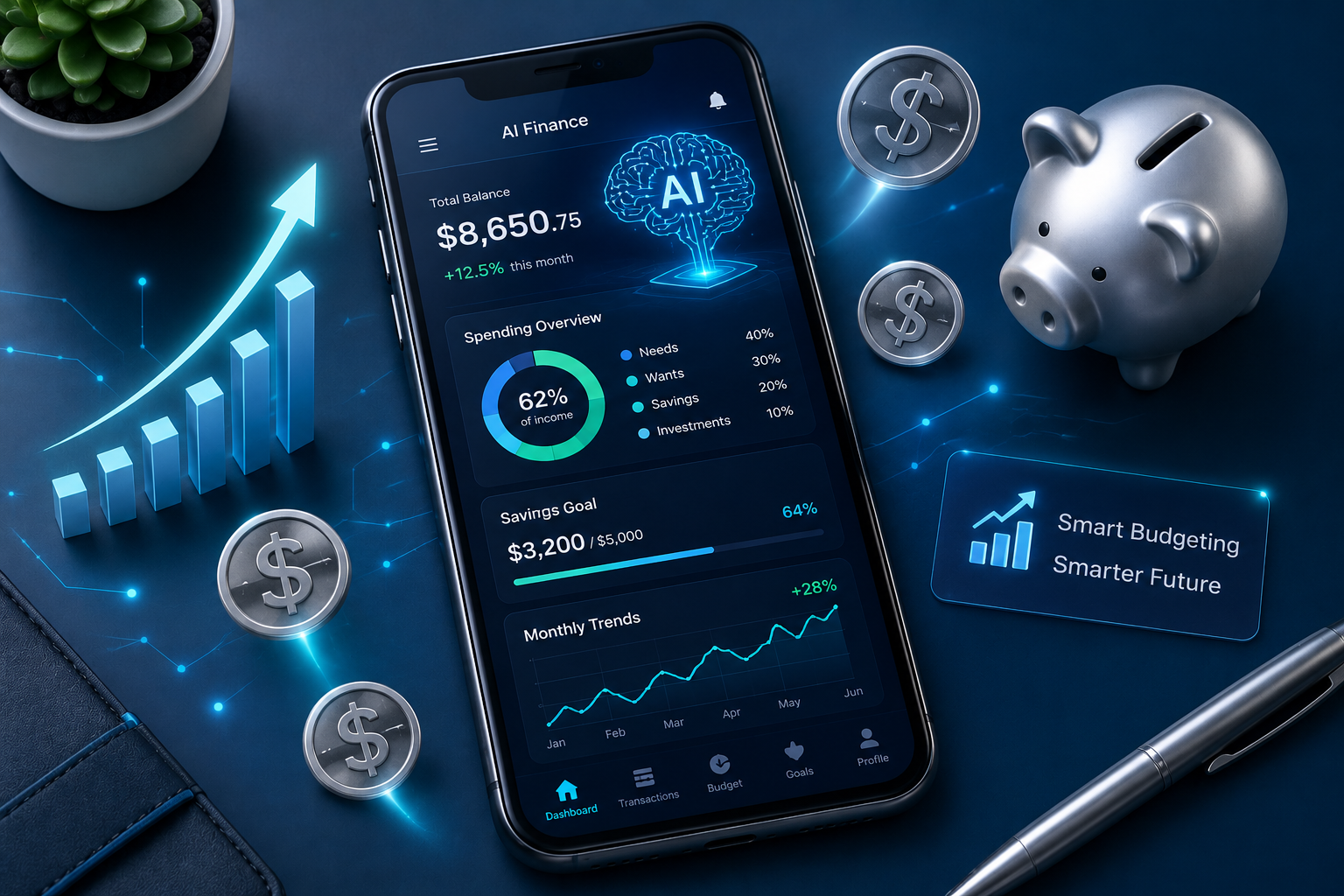
A few years ago, artificial intelligence in personal finance meant little more than a chatbot that could answer basic budgeting questions. In 2026, that’s changed dramatically. AI now sits quietly behind your banking app, your investment account, your grocery shopping, and even your negotiation emails, working in the background to help you spend smarter, save more consistently, and grow your money with far less manual effort than it used to take.
The interesting part isn’t that AI exists in finance now. It’s how ordinary people are actually using it day to day to plug the small leaks in their budget, avoid emotional money mistakes, and build wealth more consistently than willpower alone ever managed to. This guide walks through exactly how to put AI to work for your finances in 2026, from everyday saving habits to long-term wealth building, without needing any technical background or a finance degree.
Let’s get into the practical side of it.
Why AI Has Become A Genuine Financial Tool In 2026
For a long time, “AI for money” was mostly marketing hype layered over fairly basic automation. That’s shifted. A few real developments explain why AI now plays a legitimate role in personal finance.
AI can process far more financial data than a person reasonably can. It can scan years of transaction history, compare thousands of investment options, or track spending patterns across multiple accounts in seconds, surfacing insights that would take a person hours to find manually.
Personalization has improved significantly. Modern AI tools don’t just apply generic budgeting rules. They adapt recommendations based on your actual income patterns, spending habits, and goals, which makes the advice far more relevant than one-size-fits-all financial tips.
AI removes emotional decision-making from repetitive tasks. A lot of financial mistakes come from emotional reactions, panic selling during a market dip, impulse purchases, or ignoring a budget after a stressful day. AI-driven automation handles routine financial tasks consistently, without the emotional interference that trips people up.
Access has become mainstream and affordable. AI-powered financial tools that used to be reserved for wealthy clients with dedicated advisors are now available through free or low-cost apps accessible to almost anyone with a smartphone.
None of this means AI replaces financial judgment entirely. It means AI has become a genuinely useful assistant for the parts of money management that are repetitive, time-consuming, or emotionally difficult to handle consistently on your own.
Using AI To Save Money: Practical, Everyday Methods
1. AI-Powered Budgeting And Spending Analysis
Modern budgeting apps use AI to automatically categorize your transactions, flag unusual spending, and identify patterns you might not notice yourself, like a subscription creeping up in price or a category where your spending has quietly crept upward over several months.
Instead of manually logging every expense, these tools analyze your linked accounts continuously and give you a real-time picture of where your money is actually going, often with plain-language summaries rather than confusing spreadsheets.
2. Subscription And Bill Auditing
One of the most immediately useful applications of AI in personal finance is subscription management. AI tools can scan your recurring charges, identify subscriptions you’ve forgotten about or rarely use, and in some cases, even negotiate lower bills on your behalf for things like internet, phone plans, or insurance.
This alone often uncovers meaningful monthly savings that would otherwise go unnoticed buried in a bank statement.
3. Smarter Shopping Decisions
AI-powered browser extensions and shopping assistants can automatically apply coupon codes, track price history to tell you whether now is actually a good time to buy, and alert you when a price drops on something you’ve been watching. Some tools also compare prices across multiple retailers in real time, saving you the manual work of checking several sites yourself.
4. Personalized Savings Automation
Rather than manually deciding how much to save each month, AI-driven savings tools analyze your income and spending patterns to automatically set aside small, manageable amounts based on what you can actually afford, adjusting in real time as your financial situation changes. This kind of dynamic, automated saving tends to be far more sustainable than a fixed savings rule that doesn’t account for fluctuating expenses.
5. Debt Payoff Optimization
AI tools can analyze multiple debts, interest rates, and your available monthly budget to recommend the most efficient payoff strategy, whether that’s tackling the highest-interest debt first or building momentum with smaller balances first. Some tools also simulate different payoff scenarios so you can see exactly how extra payments would shorten your timeline and reduce total interest paid.
Using AI To Build Wealth: Long-Term Strategies
1. AI-Assisted Investment Platforms
Robo-advisors and AI-driven investment platforms build and manage diversified portfolios based on your goals, risk tolerance, and timeline. They handle rebalancing automatically, adjusting your portfolio over time to maintain your target allocation without requiring you to manually buy and sell.
In 2026, many of these platforms have become significantly more sophisticated, incorporating tax-efficient strategies like automatically harvesting investment losses to offset gains, a strategy that used to be reserved for investors with dedicated financial advisors.
2. Personalized Financial Planning
AI-powered financial planning tools can model different life scenarios, like buying a home, changing careers, or retiring early, and show you realistic projections based on your actual financial data rather than generic assumptions. This makes long-term planning feel far more tangible and specific to your situation, rather than relying on broad rules of thumb that may not apply to you.
3. Market Research And Analysis
AI tools can summarize earnings reports, analyze market trends, and surface relevant news for the specific investments in your portfolio, saving significant research time compared to manually reading through financial reports and news sources yourself. This doesn’t replace understanding the fundamentals of what you’re investing in, but it does make staying informed considerably more efficient.
4. Real Estate And Property Analysis
AI-powered real estate tools can now analyze property values, rental income potential, and neighborhood trends far more quickly than manual research, helping both first-time homebuyers and real estate investors make more informed decisions based on data rather than guesswork.
5. Side Income And Skill Development
AI tools have also made it easier to build additional income streams that feed directly into your wealth-building efforts, whether that’s using AI writing and design tools to launch a side business, using AI-powered learning platforms to build new marketable skills, or automating parts of a small business you’re already running.
Building An AI-Powered Money System: A Step-By-Step Approach
Step 1: Consolidate And Connect Your Accounts
Start by linking your bank accounts, credit cards, and investment accounts to a trusted AI-powered budgeting or financial tracking app. This gives the AI a complete picture of your finances, which is essential for accurate insights and recommendations.
Step 2: Let AI Audit Your Spending First
Before making changes, let the tool analyze a few months of your spending patterns. This baseline data helps you and the AI identify realistic opportunities to save without guessing.
Step 3: Automate Your Subscription And Bill Management
Use AI tools to audit recurring charges, cancel what you don’t need, and negotiate lower rates where possible. This is often the fastest, easiest win, since it requires very little ongoing effort once set up.
Step 4: Set Up Automated, Adaptive Savings
Rather than manually transferring money to savings, use an AI-driven tool that automatically adjusts your savings contributions based on your actual cash flow, so you’re saving consistently without accidentally overcommitting during tighter months.
Step 5: Choose An AI-Assisted Investment Platform
If you’re new to investing, a robo-advisor can build and manage a diversified portfolio for you based on your goals and risk tolerance. If you’re more experienced, use AI research tools to supplement your own investment decisions rather than fully outsourcing them.
Step 6: Use AI For Debt Payoff Strategy
If you’re carrying debt, input your balances and interest rates into an AI debt payoff tool to identify the most efficient payoff order and see how extra payments would affect your timeline.
Step 7: Review Insights Regularly, But Let Automation Handle The Routine Work
Check in with your AI tools periodically to review trends and adjust your goals, but let the automated systems handle the day-to-day and month-to-month execution. The real value of AI in personal finance comes from consistency, not constant manual oversight.
Step 8: Reinvest Your Savings Intentionally
As AI tools help you uncover savings from subscriptions, better shopping decisions, and optimized bills, direct that freed-up money toward your investment accounts or debt payoff rather than letting it quietly disappear back into everyday spending.
Important Cautions When Using AI For Your Finances
AI recommendations aren’t infallible. These tools work from patterns and data, not perfect foresight. Always apply your own judgment, especially for major financial decisions like large investments or big purchases.
Data privacy matters. Linking your financial accounts to any app means trusting that platform with sensitive data. Stick to well-established, reputable financial tools with strong security practices and clear privacy policies.
AI isn’t a substitute for financial literacy. Understanding the basics of budgeting, investing, and debt management helps you use AI tools more effectively and catch potential errors or unsuitable recommendations, rather than blindly following automated advice.
Beware of AI-powered scams. As legitimate AI financial tools have grown, so have scams using AI-generated content, fake investment bots, and deepfake endorsements. Only use well-reviewed, established platforms, and be skeptical of anything promising guaranteed high returns.
Automation still needs occasional human check-ins. Life circumstances change, income fluctuates, and goals evolve. Periodically reviewing your AI-managed finances ensures the automation still reflects your actual current situation rather than outdated assumptions.
Common Mistakes People Make When Using AI For Money Management
Setting it and forgetting it completely. While automation reduces manual effort, ignoring your finances entirely can let errors or outdated settings go unnoticed for months.
Over-relying on AI for major financial decisions. Big decisions like buying a home, changing investment strategy significantly, or taking on major debt deserve careful personal consideration, not just an algorithm’s suggestion.
Using too many overlapping tools. Juggling five different AI finance apps that all do similar things creates confusion rather than clarity. Choose a focused set of tools that cover budgeting, saving, and investing without excessive overlap.
Ignoring the insights the AI provides. Some people connect these tools but never actually act on the recommendations, which defeats much of the purpose. The value comes from following through on what the data reveals.
Neglecting basic financial literacy. Treating AI tools as a complete replacement for understanding your own finances can leave you unprepared to evaluate whether a recommendation actually makes sense for your situation.
Is AI-Powered Money Management Right For You?
AI financial tools tend to work best for people who want consistency and automation without needing to micromanage every transaction themselves. If you find budgeting tedious, tend to forget about subscriptions, or struggle with emotional financial decisions, AI-powered automation can genuinely change your financial habits for the better.
It’s less useful, or at least needs more caution, if you’re not comfortable linking your financial accounts to third-party apps, or if you tend to disengage entirely once something is automated. The best results come from combining AI automation with periodic, intentional check-ins rather than complete hands-off delegation.
Final Thoughts
AI has quietly become one of the most practical tools available for everyday money management in 2026, not by replacing financial judgment, but by handling the repetitive, detail-heavy work that used to eat up time and mental energy. From catching forgotten subscriptions to building diversified investment portfolios, AI tools now make it significantly easier to save consistently and grow wealth over time, even for people who’ve never felt confident managing money on their own.
The key is treating AI as a genuinely useful assistant rather than a magic solution. Combine its efficiency and consistency with your own judgment and periodic oversight, and you’ll likely find that both saving money and building long-term wealth feel considerably more manageable than they used to.
Frequently Asked Questions
Is it safe to link my bank accounts to AI financial apps? Reputable, well-established financial apps use strong encryption and security practices to protect linked account data. Stick to widely trusted platforms and review their privacy policies before connecting sensitive financial information.
Can AI actually help me save more money than doing it manually? Many people find AI tools help them save more consistently, primarily because automation removes the reliance on willpower and manual tracking, which tend to be the biggest obstacles to consistent saving.
Do I still need to understand personal finance basics if I use AI tools? Yes. Understanding the fundamentals helps you evaluate whether an AI tool’s recommendations actually make sense for your situation, rather than blindly trusting automated suggestions.
Are robo-advisors as effective as human financial advisors? For many people with straightforward investment goals, robo-advisors offer a cost-effective, well-diversified approach. More complex financial situations may still benefit from working with a human advisor alongside AI tools.
What’s the easiest way to start using AI for personal finance? Start small, with a single AI-powered budgeting or subscription-tracking app, before expanding into investment tools or more advanced automation. Building comfort with one tool at a time tends to work better than overhauling your entire financial system at once.